
May is a time when we are supposed to protect progress, not weaken it. Yet the Food and Drug Administration’s (FDA) 2026 authorization of the first fruit-flavored vapes for adults 21 and older raises serious public health concerns, especially for youth who are already vulnerable to nicotine addiction and industry marketing.
This decision may be framed as an adult-only regulatory step, but history tells us that harmful products made more appealing to adults often become more visible, more desirable, and more accessible to young people. For prevention organizations like My Neighbor’s Keeper Alliance Inc (MyNKA)., this is not just a policy change — it is a setback.
Why Flavors Matter
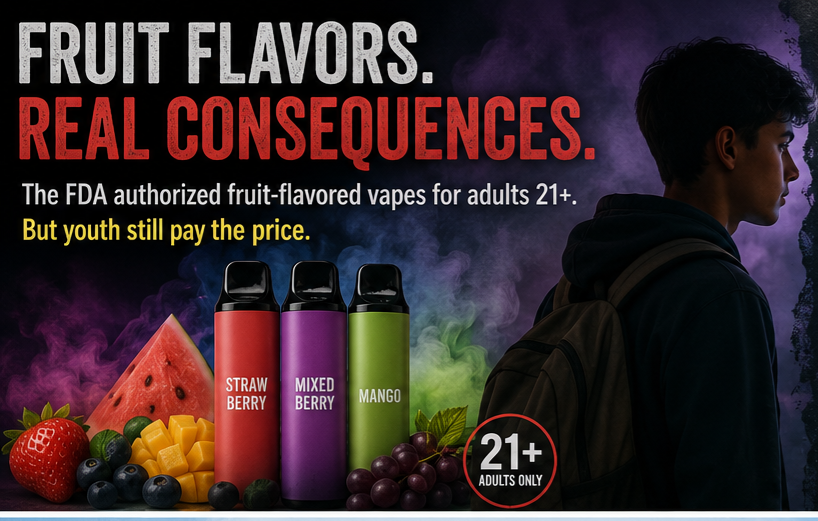
Flavors are not a small detail. They are one of the biggest reasons young people try nicotine products in the first place. Fruit, candy, mint, and other sweet flavors reduce the harshness of nicotine and make vaping feel more appealing and less dangerous than it really is.
That is exactly why flavored e-cigarettes have been such a major concern in youth prevention work. Research has shown that flavored products increase adolescents’ willingness to try nicotine and cannabis vape products, especially when compared with unflavored or tobacco-flavored versions. In other words, flavors are not neutral. They are a recruitment tool.
Why “Adults Only” Does Not Protect Youth
Age restrictions sound protective on paper, but they do not fully stop youth access in real life. Teenagers often get products from older peers, siblings, informal sharing, or online sources. Once a product becomes normal in adult spaces, it is easier for youth to see it, want it, and eventually get it.
That is why this approval is so troubling. Even if the product is legally marketed for adults 21 and older, the social message is still visible to youth: fruit-flavored nicotine is now being treated as acceptable enough to authorize. For teenagers, that can lower the sense of risk and increase curiosity.
What This Means for Prevention
Organizations like My Neighbor’s Keeper Alliance have spent years teaching children, teens, and families that nicotine is addictive and flavored vape products are designed to hook young users. This FDA decision complicates that message. It gives the appearance of legitimacy to a product category that prevention advocates have worked hard to discourage.
Public health progress depends on consistency. When young people hear “this is only for adults” but continue to see flavored nicotine products in stores, online discussions, and social media, the boundaries blur. Prevention becomes harder when harmful products are repackaged as regulated choices.
The Pattern We Have Seen Before
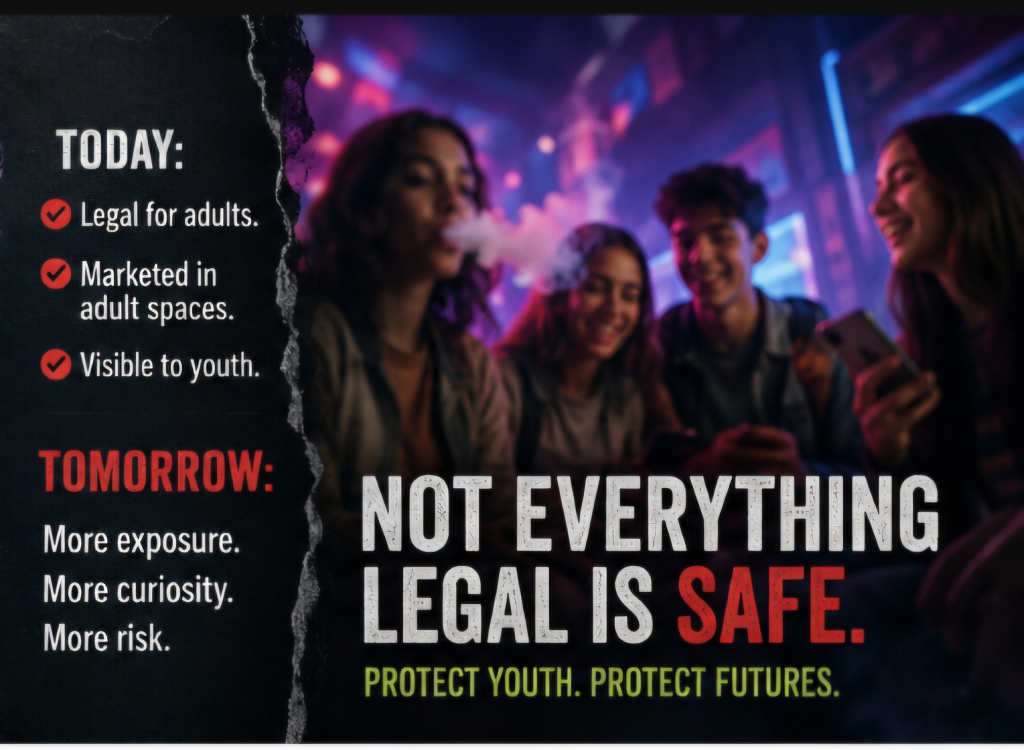
We have seen this pattern with alcohol, marijuana, and gambling. When a harmful or addictive behavior is legalized for adults, young people often begin to see it as normal, harmless, or aspirational. Legalization does not automatically mean youth protection.
Alcohol is the clearest example. Even though it is illegal for people under 21, underage drinking has remained a persistent public health problem for decades. Recreational marijuana has created similar confusion in many communities, where teens hear “it is legal” and interpret that as “it is safe.” Sports betting and gambling have followed the same path, becoming normalized in a way that can make youth exposure feel casual instead of dangerous.
The lesson is simple: anything harmful that becomes legal for adults can become more visible and more tempting for youth unless prevention efforts are strong and consistent.
Why This Is Dangerous Over Time
The danger is not only immediate experimentation. The bigger concern is long-term normalization. Once young people grow up seeing flavored nicotine products as ordinary, the behavior becomes easier to justify, easier to try, and harder to stop.
Nicotine addiction can affect attention, mood, impulse control, and brain development during adolescence. That means even brief or casual use can have real consequences. Over time, what begins as a “fruit-flavored adult product” can contribute to a new generation of young people struggling with dependence, cravings, and other health risks.
What Communities Should Do
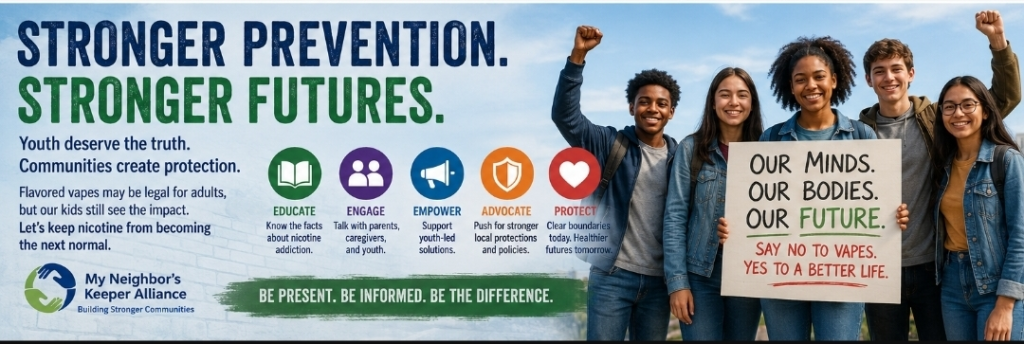
This is the time for stronger prevention, not silence. Schools, parents, faith leaders, health professionals, and community organizations need to keep speaking directly to youth about the risks of vaping and nicotine addiction.
MyNKA and similar organizations can respond by:
- reinforcing education about nicotine addiction.
- correcting misinformation about flavored vape products.
- engaging parents and caregivers in prevention conversations.
- creating youth-led campaigns that speak in honest, age-appropriate language.
- advocating for stronger local restrictions and public health safeguards.
A Call to Action
The FDA’s decision is a reminder that youth protection cannot depend on regulation alone. Communities must stay alert, speak plainly, and refuse to let harmful products become normalized just because they are marketed for adults.
Young people deserve more than mixed messages. They deserve clear boundaries, honest education, and adults who are willing to say that not everything legal is safe. MyNKA’s voice matters here, because prevention is not just about stopping use — it is about protecting futures.
References
- Centers for Disease Control and Prevention. (2024). Youth e-cigarette use and flavored product trends.
- Centers for Disease Control and Prevention. (2024). National Youth Tobacco Survey findings.
- Food and Drug Administration. (2026). Authorization of fruit-flavored e-cigarette products for adults 21 and older.
- National Center for Chronic Disease Prevention and Health Promotion. (2026). Youth nicotine use and prevention.