
For the boys we are losing. For the parents who don’t know yet.
— I. The Lure —
He is fourteen, maybe fifteen, phone warm in his hand,
the stadium roaring through a screen he barely understands.
An ad cuts in — a legend smiles, the odds flash gold and bright —
“Place your bet. Feel alive. One tap. Tonight’s your night.”
He has seen this a thousand times before the age to vote,
the jingle lodged inside his brain like words to a song he never wrote.
They dressed it up in jerseys, in celebrity, in thrill —
a casino in his pocket, and they handed him the bill.
— II. The Hook —
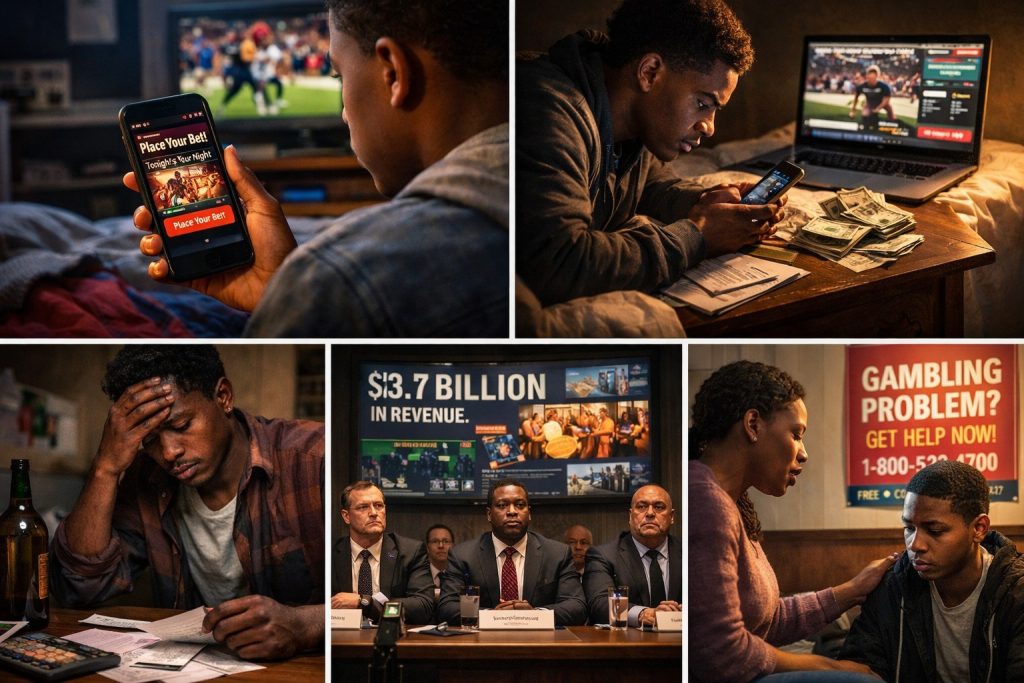
It starts slow — a friendly bet, a fiver on the game,
the dopamine that fires when his pick arrives the same.
The scientists will tell you what the industry already knows:
the adolescent brain lights up wherever pleasure goes.
Reward without restraint — the gas before the brakes —
a boy who cannot stop himself from doubling down his stakes.
Not casinos, not Vegas — just a phone beside his bed,
micro-betting through the night on every play ahead.
A pitch. A free throw. First and ten. The algorithm knows
the moment that he’s losing is the moment that he owes.
So it offers him another chance to win the money back —
and the boy who came for football’s now a rat inside a trap.
“Why would I ever work again?” he thought at 17 —
not knowing that the house had built the whole machine.
— III. The Fall —
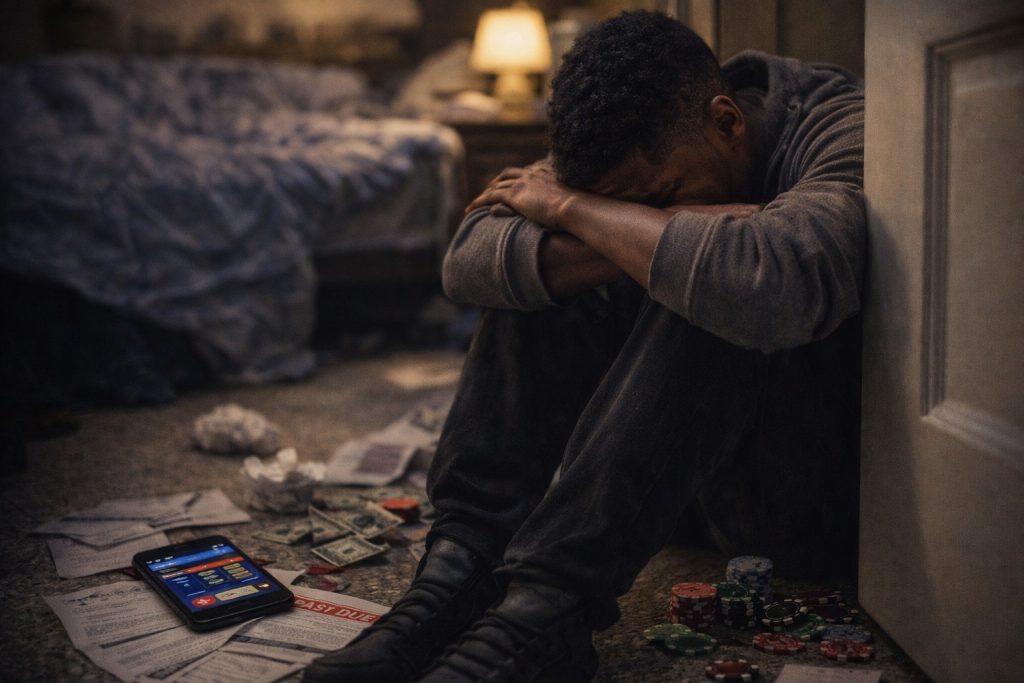
Six years. Six times in debt. A second job to pay the loss.
A generation learning that their future has a cost.
1 in 5 youth gamblers will spiral past the point of fun —
seven times the rate of adults when the damage is all done.
He skips the class. He skips the meal. He skips the family call.
He borrows from his little sister, lies about it all.
His moods move with the markets — up and crashing with the scores —
and nobody has noticed yet because he locks his doors.
They said the mind would catch up — that the brakes would come in time —
but the product moved far faster than the prefrontal climb.
The reward came first. The ruin came second. The help came last.
And another boy became a statistic of the past.
— IV. The Indictment —
While he spiralled, the state counted $3.7 billion in tax,
legislators nodding as the lobbyists relaxed.
“It’s entertainment,” said the suits behind the quarterly report,
as the clinics filled with children who had run out of support.
They built the AI smarter so the bets could never pause,
then shrugged at every hearing and pointed at the laws.
The law that they had written. The loophole they had sewn.
The generation they had harvested and left to reap alone.
Celebrities endorsed it. Algorithms placed the bait.
The ads ran during cartoons. During school. During late.
And parents, still exhausted from the last thing on their screens,
did not yet know their sons were living out the industry’s dreams.
— V. The Wake-Up Call —
So this is the accounting. This is where we draw the line.
Not when it’s convenient. Not at some later, safer time.
Now — while the boy is still a boy. While the door is still ajar.
While the parent has a chance to ask him how and where and why and far.
Communities — look inward. See the silence in your halls.
The kid who stopped showing up. The friend who never calls.
The teenager who’s anxious, who is restless, who is frail —
not broken beyond fixing, but too deep inside the spiral’s tail.
Leaders — choose your legacy. The revenue will fade.
But the minds you fail to protect are the debts that can’t be paid.
Regulate the in-game bet. Audit every ad.
Ask yourself at every vote: whose future have we had?
— VI. The Reckoning —
He placed his last bet in 2022.
He makes TikToks from a cubby in his room.
He hears from teens — each day, a new one finding him —
boys standing at the very same familiar rim.
He survived. Not all of them will.
The house always wins —
unless the people change the rules,
unless the parents start the talk,
unless the leaders find the will,
unless the communities wake up —
before the next boy does.
—
If this poem resonates — act now.
Problem Gambling Awareness Month · March 2026
Maryland: 1-800-GAMBLER · helpmygamblingproblem.org
National: 1-800-522-4700 · ncpgambling.org/chat
Free · Confidential · Available 24/7
Source: Based on a Youtube video by ABC News: How in-game sports betting is fueling addiction concerns among young men